Most strategy games promise control. Few deliver depth. The best strategy building games don’t just give you tools—they force you to think ten steps ahead, adapt to chaos, and balance ambition with survival. Whether you're managing food shortages in a fledgling colony or orchestrating invasions across continents, these games test foresight, patience, and decision-making under pressure.
What separates a passable city simulator from a masterpiece of strategic design? It’s not graphics or scope—it’s consequence. The best titles make every choice ripple through your campaign. Build too fast without infrastructure? Prepare for riots. Expand your empire without diplomacy? Expect coalitions. The real challenge isn’t placing buildings—it’s managing the cascade of cause and effect.
Here’s a curated list of the most demanding, rewarding strategy building games available today—each defining what it means to build not just structures, but systems.
---
What Defines a True Strategy Building
Game?
Not every game with towers and troops qualifies. Strategy building games center on long-term planning, resource allocation, and systemic interdependence. You’re not reacting—you’re designing.
Key characteristics: - Infrastructure progression: Unlocking and upgrading systems over time - Resource chains: From raw materials to finished goods, with bottlenecks - Population or unit management: Happiness, morale, specialization - Failure from mismanagement: Starvation, rebellion, economic collapse - Victory through design: Winning via efficiency, not just force
Games that skip meaningful trade-offs—like auto-resolving production or ignoring supply lines—feel shallow. The top-tier titles force you to sweat the details.
---
1. Crusader Kings III –
Dynasty as a Strategic Layer
Paradox’s medieval epic turns lineage into a weapon. You don’t just command armies—you arrange marriages, manipulate faith, and time assassinations. The "building" here is social: constructing a legacy that outlives your ruler.
Why it stands out: - Bloodlines impact military recruitment, succession, and diplomacy - Vassal management is a constant balancing act—push too hard, face rebellion - Religion and culture shape expansion options
Common mistake: Focusing only on war. The best players use diplomacy and intrigue to expand influence without firing a shot. Losing a war early? A well-placed marriage can reclaim territory through inheritance.
Use case: You inherit a small duchy in 867 AD. Over 200 years, you maneuver marriages, exploit feudal tensions, and eventually claim the imperial title—all without direct conquest.
---
2. Cities: Skylines II – Urban
Planning Meets Economic Simulation
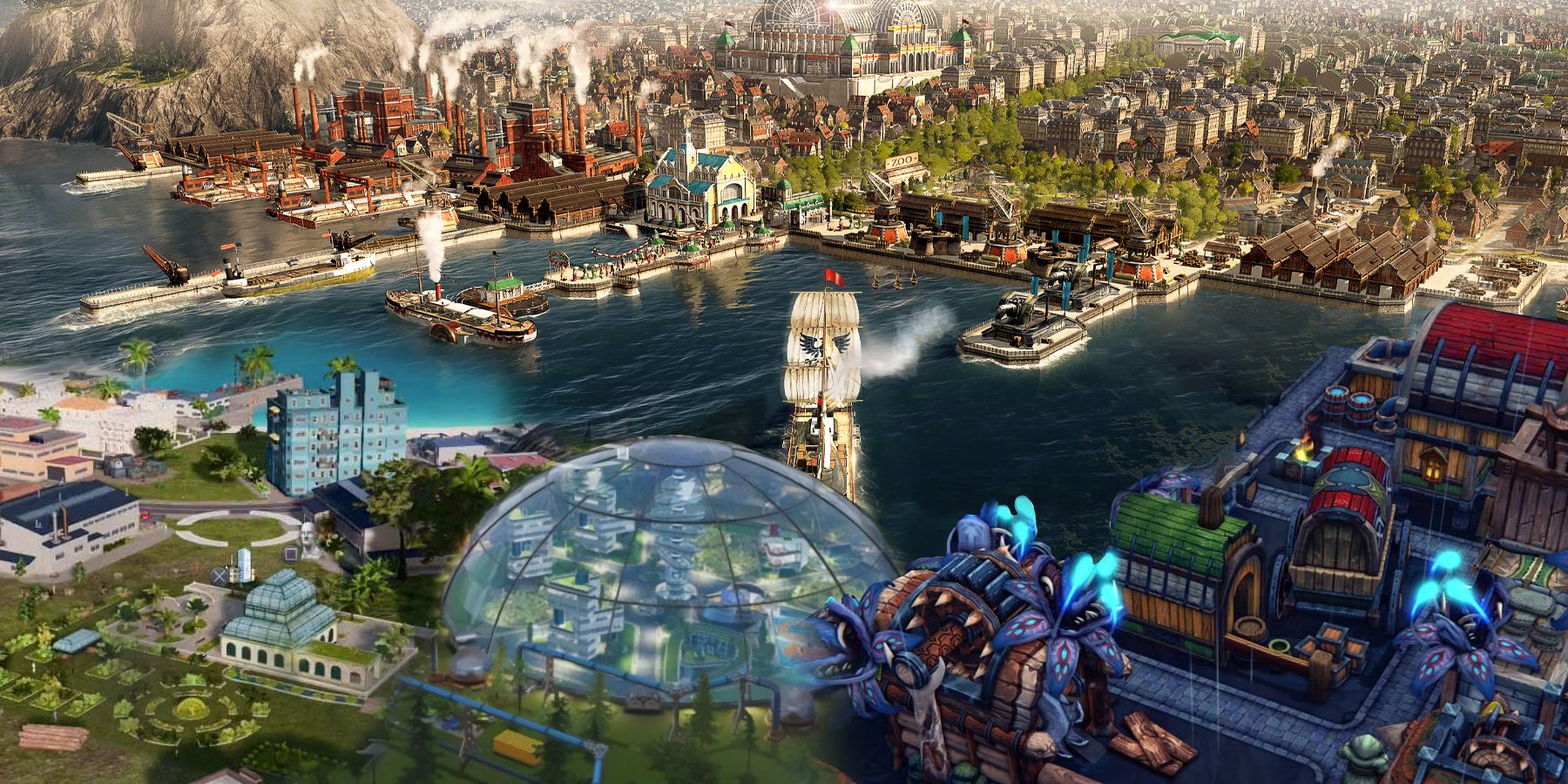
Colossal Order’s sequel doubles down on realism. Traffic isn’t just a nuisance—it’s the nervous system of your city. Mismanaged roads don’t just cause delays; they collapse supply chains, tanking industry and tax revenue.
Deep systems include: - Dynamic economic model (residents earn wages, spend locally) - Zoning with long-term land value shifts - Fully simulated citizen AI with needs, jobs, and commutes
Limitation: Performance issues at large city sizes. But when running smoothly, it’s unmatched for granular control.
Workflow tip: Build residential last. Start with industry and jobs, then attract population. Reverse order leads to empty housing and tax deficits.
---
3. Satisfactory – Factory
Building in a Hostile Open World
Forget blueprints—here, you’re sculpting factories across alien terrain. First-person, 3D, and brutally precise, Satisfactory makes you wrestle with conveyor belts, power grids, and resource tiers.
What makes it unique: - Vertical building: Stack factories across cliffs and caves - Power tiers: Coal → nuclear → fusion, each requiring massive infrastructure - Environmental threats: Wildlife attacks, limited build zones
Common failure: Power grid overload. New players often scale steam power too fast, leading to blackouts. Solution: Overbuild power by 30% early, or use modular reactor staging.
Real use case: You discover a pure sulfur node 10km from base. Do you extend power lines (costly) or build a satellite factory (vulnerable)? Trade-offs define the experience.
---
4. Total War: Pharaoh – Civilization
Under Collapse
Creative Assembly’s latest adds real environmental drama. The Late Bronze Age wasn’t just war—it was famine, migration, and divine panic. Pharaoh forces you to manage both army and altar.
Key mechanics: - Seasonal Nile floods impact farming (too low: drought, too high: floods) - Religious unrest if gods aren’t appeased - Dynamic invasions from Sea Peoples
Strategic layer: You’re not just building cities—you’re preserving culture. Let temples decay, and your army loses morale.
Pro tip: Assign governors early. Delegating city management frees you to handle diplomacy and war.
---
5. Oxygen Not Included – Survival
Through Engineering
Klei Entertainment’s space colony sim is a masterclass in systems thinking. Every gas, liquid, and creature interacts. Mess up ventilation? CO2 builds up. Overheat a room? Dupes pass out.
Critical systems: - Gas pressure and temperature layers - Nutrient cycles (waste → fertilizer → food) - Dupes with stress, skills, and needs
Design challenge: Early players tunnel too deep, flooding base with CO2 or steam. Smart builders start shallow, use airlocks, and plan vertical shafts for convection.
It’s not about surviving—it’s about building a self-regulating ecosystem where mistakes are punished instantly.
---
Comparison: Real-Time vs. Turn-Based
Strategy Builders
| Feature | Real-Time (e.g., Satisfactory) | Turn-Based (e.g., Crusader Kings III) |
|---|---|---|
| Pacing | Constant pressure, multitasking | Deliberate, pause-and-plan |
| Mistake Recovery | Often irreversible | Rewind or adjust next turn |
| Best For | Hands-on builders, tactile control | Deep schemers, long arcs |
| Cognitive Load | High (reflex + planning) | High (abstraction + memory) |
| Learning Curve | Steep from mechanics | Steep from systems |
Verdict: Choose real-time for immersion and engineering precision. Choose turn-based for narrative depth and political maneuvering. The best players often master both.
---
Hidden Gem: Distant Worlds 2 – Galactic
Empire Simulation
Few games match its scale. You control everything from ship design to trade routes across hundreds of systems. AI admirals act independently. Colonies evolve based on tech and policy.
Why it’s underrated: - Full automation option—set rules, let AI handle details - Dynamic events: rebellions, alien contact, economic crashes - Fleet logistics matter—no supply, no war
Not flashy, but for players who want to govern a galaxy, not just conquer it, this is peak strategy.
---
Strategy Building Pitfalls to Avoid
Even experienced players fall into traps:
- Overexpansion – Founding cities faster than you can manage leads to unrest and bankruptcy.
- Ignoring soft power – In games like Crusader Kings, culture and religion open doors violence cannot.
- Linear tech paths – Skipping key mid-tier upgrades cripples late-game performance.
- Micromanaging – Let systems run. Only intervene when metrics drop.
- Underestimating AI alliances – In Total War or Pharaoh, neighbors will unite if you grow too strong too fast.
Pro workflow: Set KPIs—track happiness, reserves, military readiness weekly (in-game). Review, adjust, delegate.
---
The Future of Strategy Building: Procedural Systems
Next-gen titles are shifting toward emergent complexity. Instead of scripted events, AI-driven ecosystems create unique problems: - Weather altering trade routes - Populations demanding new rights based on wealth - Factions evolving ideologies over time
Games like Oxygen Not Included and Dwarf Fortress (via Pillars of Eternity II’s influence) point the way: the best challenges aren’t designed—they’re discovered.
---
The best strategy building games don’t hand you victories. They hand you tools, constraints, and consequences. You build not for the sake of construction—but to outthink collapse.
Start small. Master one system. Scale deliberately. And remember: the strongest empire isn’t the largest—it’s the one that doesn’t crumble under its own weight.